The first few weeks of Donald Trump’s second presidential term began — as did so many events that defined his first four years in office — with a nationwide search for categories. How best to describe the mass firings of civil servants, the impoundment of billions in congressionally appropriated funds, the disappearances and arbitrary detentions, and the refusals to abide by court injunctions on these maneuvers? A coup or a constitutional crisis? A pushing of the office’s boundaries or a rupture of the separation of powers? Questions like these haunted the pages of the Washington Post and Foreign Affairs and interviews on public radio, to say nothing of the listservs of legal scholars. These were, by this point, quite familiar lines of inquiry. They would not have been out of place in the voluminous pop social science and history titles that materialized on the shelves of airport bookstores to process Trump’s first term, books with stark monochromatic covers and titles like How Democracies Die.
If the questions were echoes of the past, the reality they aimed to classify was not. The first few months of 2017 were characterized by chaotic but ultimately halting attempts of an administration not quite ready to step into the void of power. The weeks that followed Trump’s second inauguration revealed an administration with a semblance of a playbook for seizing the state — articulated by presidential transition teams like the Heritage Foundation’s Project 2025 blueprint. The plans brought with them a more coherent cadre of leaders vetted by Trump’s political operation, in contrast to the motley gang of Republican functionaries who surrounded the president in 2017. At the center of these operations was the richest man in the world, Elon Musk, who had (until his messy breakup with the president) been allowed unfettered access to the technical interface of federal agencies — including access to payment and personnel management systems. These differences were reinforced by a new legal climate; in its decision in Trump v. United States (2024), the Supreme Court had extended the doctrine of presidential immunity to all of a president’s official acts. If the boundaries on the executive were a series of doors pretending to be walls, they were open. By late February, it was hardly out of place for Trump to write on his personal X and Truth Social accounts that “he who saves his Country does not violate any Law.”
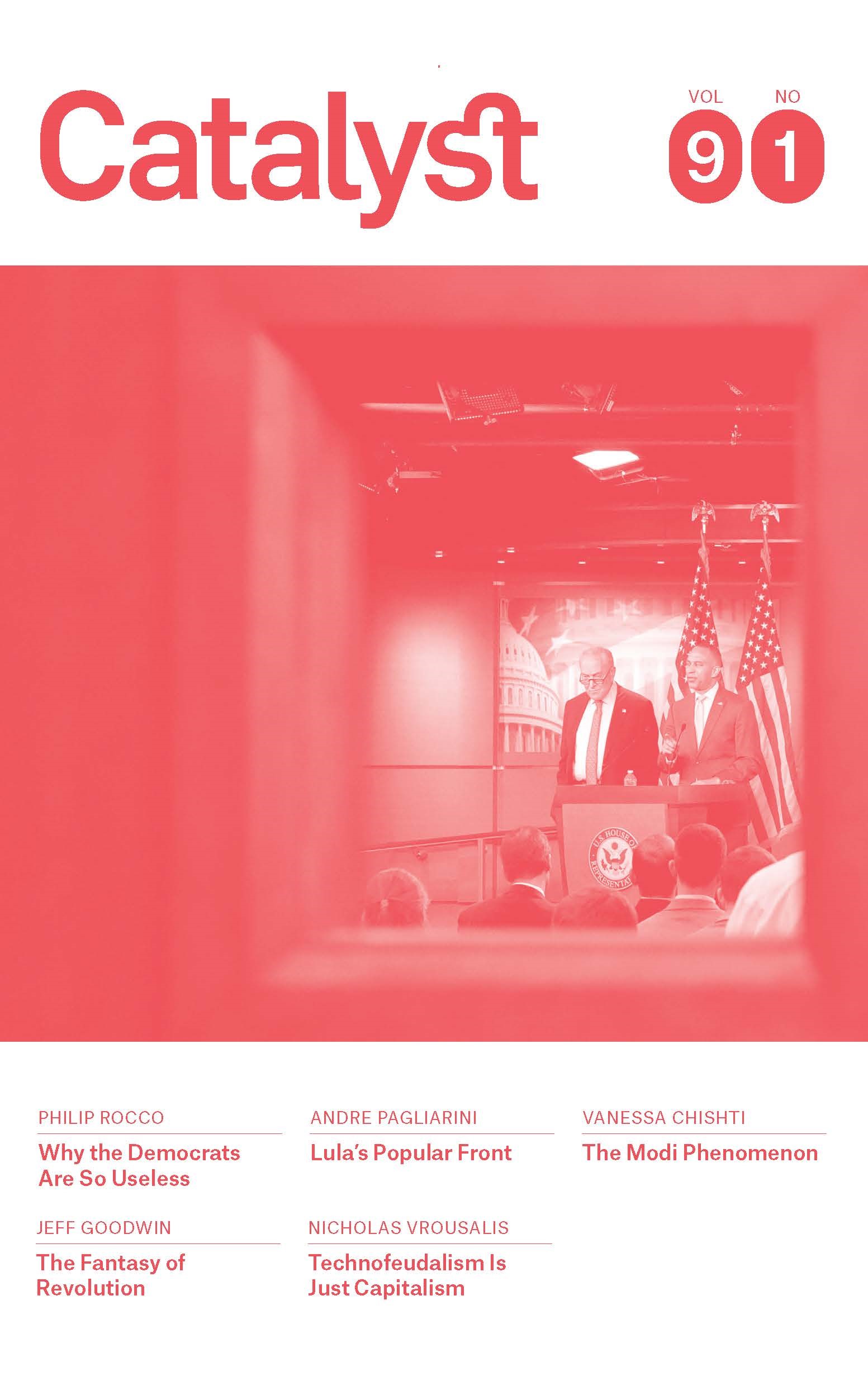
Perhaps no difference was quite as stark as the initial absence of a visible political opposition. Leaders of the Democratic Party appeared incapable of metabolizing the assault on the political arena that was to come. House minority leader Hakeem Jeffries summed up the party’s early “play dead” strategic posture in a February press briefing: “What leverage do we have? Republicans have repeatedly lectured America — they control the House, the Senate, and the presidency. It’s their government.” In the ensuing months, public protest actions have ramped up somewhat, as federal employees have been sacked by the tens of thousands, hundreds of billions in federal grants were terminated, and noncitizens were disappeared to ICE detention facilities or, worse, a gulag in El Salvador. Still, even if the second coming of the Trump “resistance” has managed to surpass the scale of the first, its impact is blunted by the absence of an initial focal-point march of the sort that brought five hundred thousand persons to Washington, DC, in January of 2017.1 Even when millions of Americans do turn out at nationwide protests, as they did in early April 2025, newspapers around the country bury protest actions on back pages.2 In any case, the most visible and impactful forms of opposition have not come from the opposition party itself.